Tobago Carnival is an annual festival held on the island of Tobago. The carnival takes place in the month of october each year.
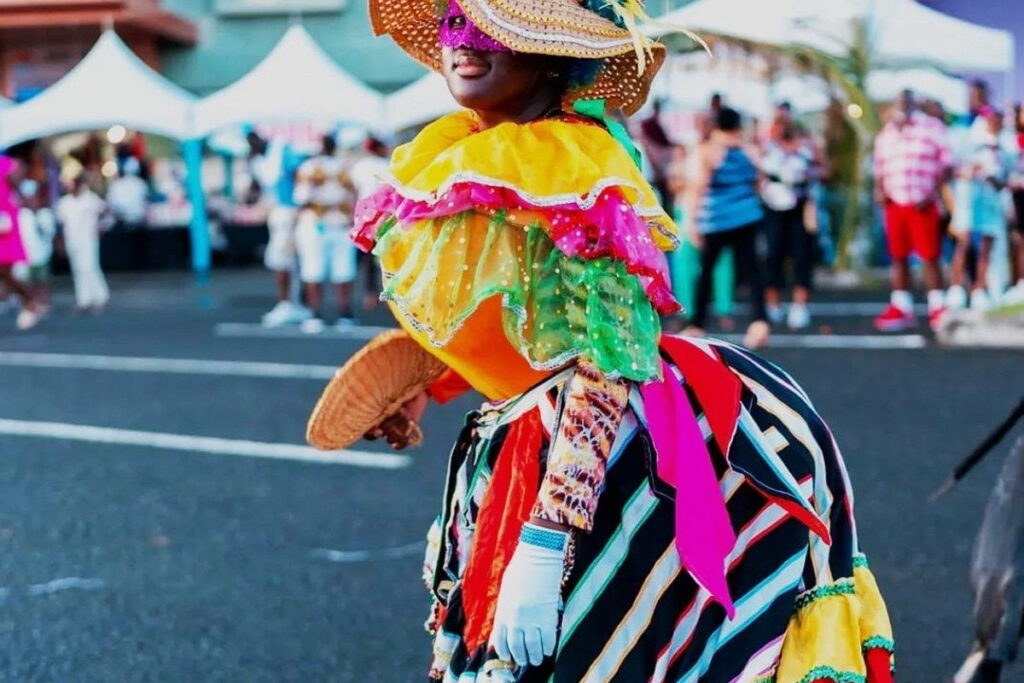
The Tobago Carnival is a vibrant celebration of music, dance, and culture, with a focus on the island’s unique traditions and heritage. The festival features colorful costumes, lively music, and energetic dance performances, with participants taking to the streets to dance and celebrate.
Although the Tobago Carnival is a smaller and more traditional version of the larger Trinidad Carnival, which takes place on the neighboring island of Trinidad. The October Tobago Carnival still attracts a large number of visitors and locals each year, with events including calypso competitions, steelpan performances, and a grand parade.
One of the highlights of the Tobago Carnival is the traditional J’Ouvert celebration, which takes place in the early hours of the morning. During J’Ouvert, participants cover themselves in mud, paint, and powder as they dance through the streets to the beat of steel drums and soca music.
The Tobago Carnival is a lively and colorful celebration of Tobago’s culture and heritage, and is a must-see event for anyone visiting the island during the Carnival season.
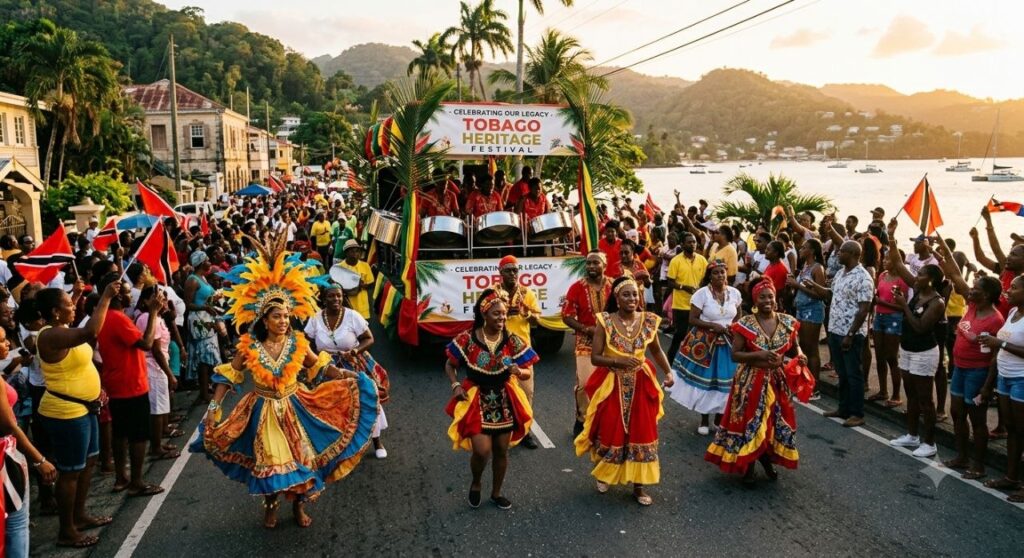
The Tobago Heritage Festival is an annual event that takes place on the island of Tobago in the Republic of Trinidad and Tobago. The festival celebrates Tobago’s rich cultural heritage and traditions and takes place over a two-week period in late July and early August.
During the festival, visitors can enjoy a wide range of cultural events and activities, including traditional music and dance performances, storytelling sessions, arts and crafts exhibitions, and local cuisine. The festival also features historical reenactments and demonstrations of traditional skills such as boat-building, basket-weaving, and wood-carving.
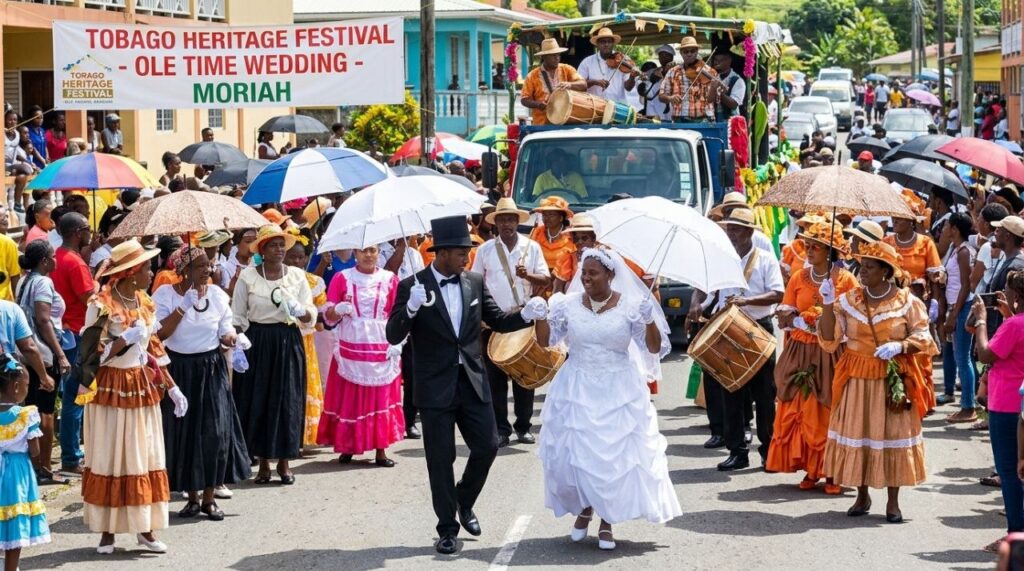
One of the highlights of the Tobago Heritage Festival is the “ole time wedding” reenactment, which is a recreation of a traditional Tobagonian wedding from the past. The festival also includes a “parang” competition, which is a type of traditional music that originated in Trinidad and Tobago.
The Tobago Heritage Festival provides an opportunity for visitors to learn about Tobago’s rich history and cultural heritage, and to experience the island’s unique traditions and way of life. The festival is a vibrant celebration of Tobago’s past, present, and future, and is a must-see event for anyone visiting the island.
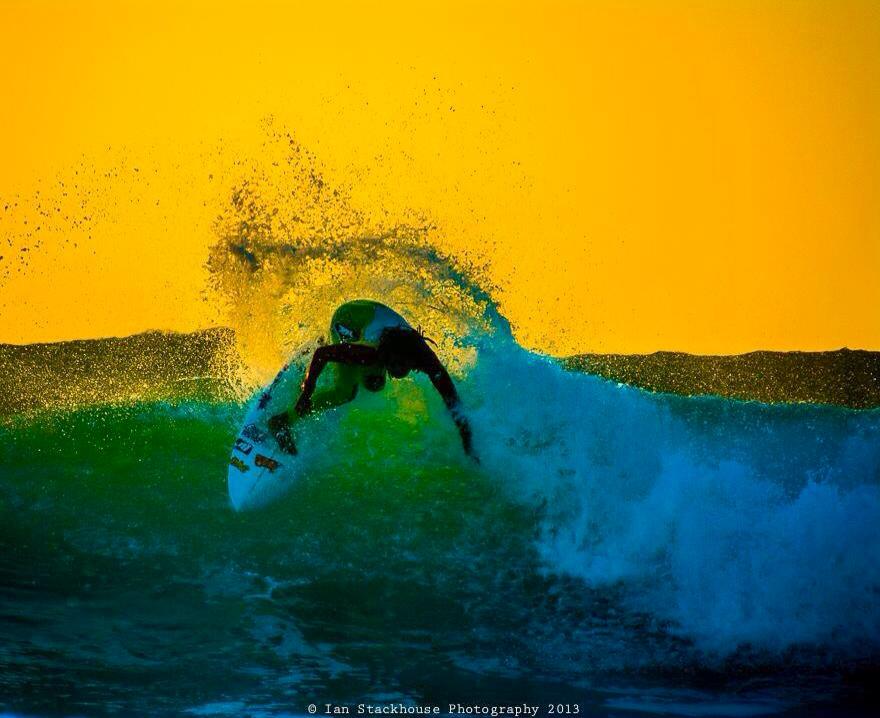
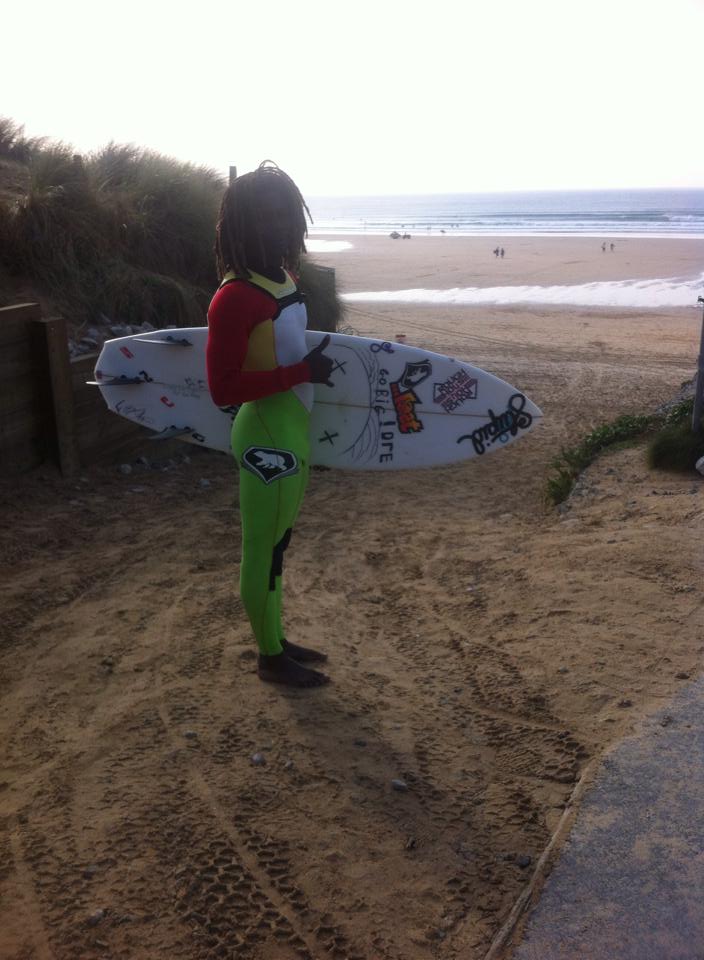
Tobago is a beautiful Caribbean island that offers excellent surfing opportunities for surfers of all skill levels. The island has a number of beaches and surf spots that are popular with both locals and visitors.
One of the best surf spots in Tobago is Mount Irvine Bay. It is a beautiful crescent-shaped beach with consistent waves and is suitable for both beginners and experienced surfers. The waves at Mount Irvine Bay are usually between 3 and 6 feet, making it an ideal spot for longboarders and shortboarders.
Another popular surf spot in Tobago is Bacolet Bay. This beach offers a variety of waves, from small and gentle to fast and powerful, making it suitable for surfers of all skill levels. Bacolet Bay is also a great spot for paddleboarding, snorkeling, and swimming.
Other surf spots in Tobago include King’s Bay, Castara Bay, and Englishman’s Bay. These spots offer a variety of waves and are suitable for different skill levels.
If you are new to surfing, there are several surf schools and rental shops on the island that can provide you with lessons and equipment. With warm water, consistent waves, and beautiful scenery, Tobago is a great destination for anyone looking to catch some waves in the Caribbean
People have been surfing in Mt. Irvine Bay Tobago since the early 1970’s. Today the bay is the go to spot for surfing on the Island. There are other known surfing bays along the coast but Mount Irvine Bay, with its right-hand reef break and waves reaching up to 3 meters high is frequented by locals and visitors.
The surf season in Tobago normally runs from late September to April, with peak season and swells happening during December to March.
On the bay you can find and hire friendly surfing guides that can give you surfing lessons and tours to secret surf spots around the island. Equipement may be provided.
History of surfing in Tobago
In the late 1960’s international visitors, mainly from the USA and Europe started surfing in Mt. Irvine, Tobago. This inspired locals like Michael Baker, Trevor Paience, David Achong and a few others to become the first to try the sport on the island. Since the 1970’s, the sport has grown steadily in popularity with the local youths of both Trinidad and Tobago. During the 1980’s 90’s and 2000’s there were various surfing competition held on Mt. Irvine bay, involving both local and international surfers. In 2016 “The Tobago Pro” competition was won by Andre Stewart of Tobago, and Adrian De Silva came in Second.
Right Surf Break
Mt. Irvine has a right hand surf break that rolls over a flat reef bed with patches of dead and alive fire corals. During high tide it can get very deep with most waves breaking off the point. At lower tides the waters can drop as low as 10 feet at the surf break.
Off the Point
The very big waves will start to peak off the tip of Rocky Point, (Back Bay). These waves can get as big as 3 meters high and become very powerful in rapid sets. Surfing off the point is only recommended for experienced surfers as the sets can get very heavy and dangerous.
Saint Giles Island is located off the northeast tip of Tobago. The island can be viewed clearly from flag-staff lookout in Charlotteville. Reef patches and cliffs surrounding the island makes it a popular dive site.
St. Giles Island
Goat Island
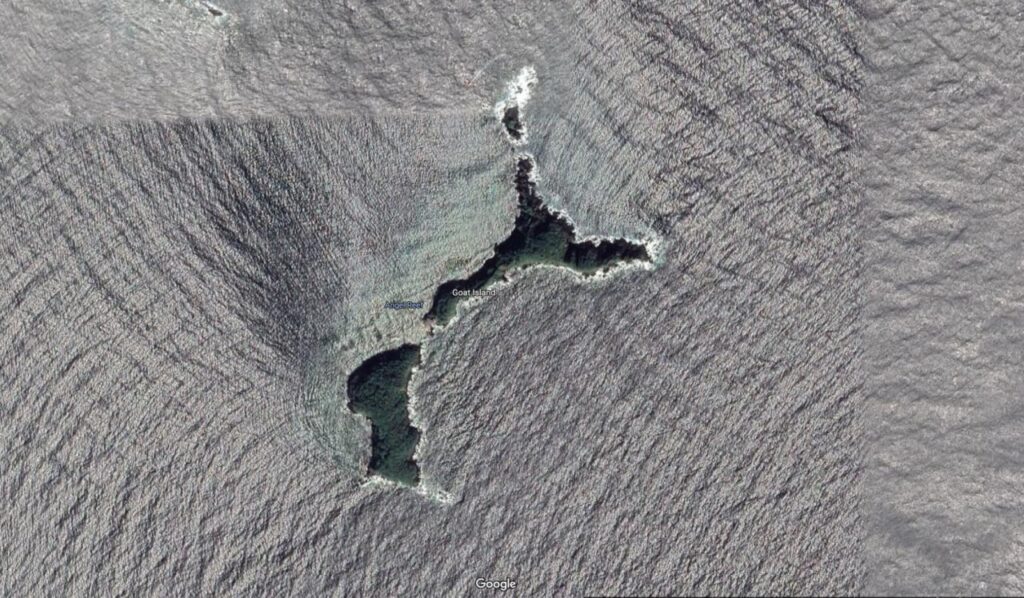
Goat Island is located off the coast of Speyside, between Tobago and Little Tobago. The reef around the island is popular with divers.
Goat Island
Little Tobago
Little Tobago is a small island off the northeastern coast of Tobago, popular with birdwatchers. The island is an important breeding site for seabirds such as red-billed tropicalbird, bridled terns and many more. Angel reef is also a popular site around the island for divers and glass-bottom boat tours.
Little Tobago
Queen’s Island
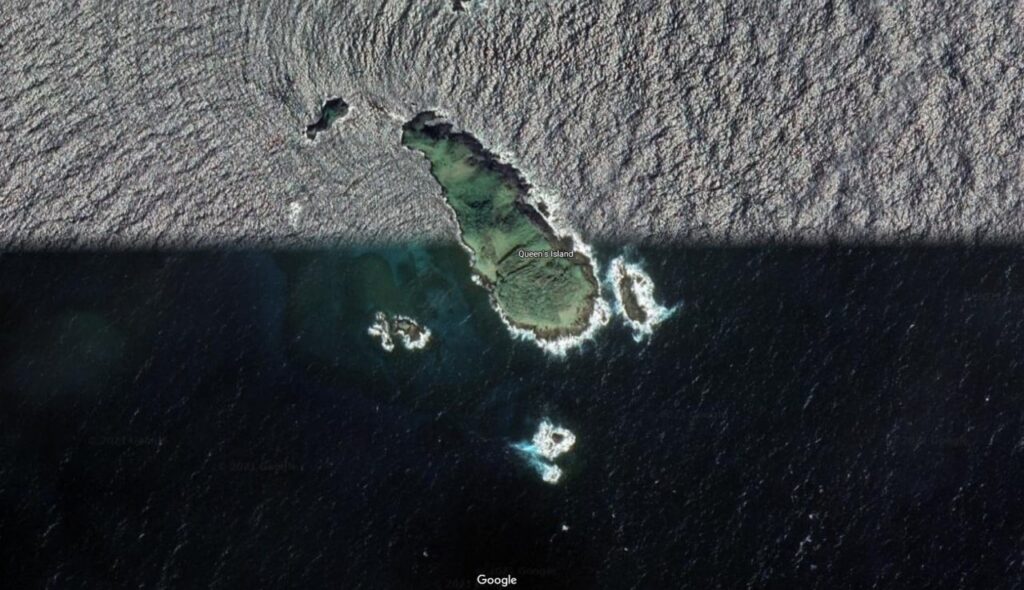
Queen’s Island is located on the north-eastern coast of Tobago outside of Louis D’or Bay and Delaford.
Queen’s Island
Richmond Island
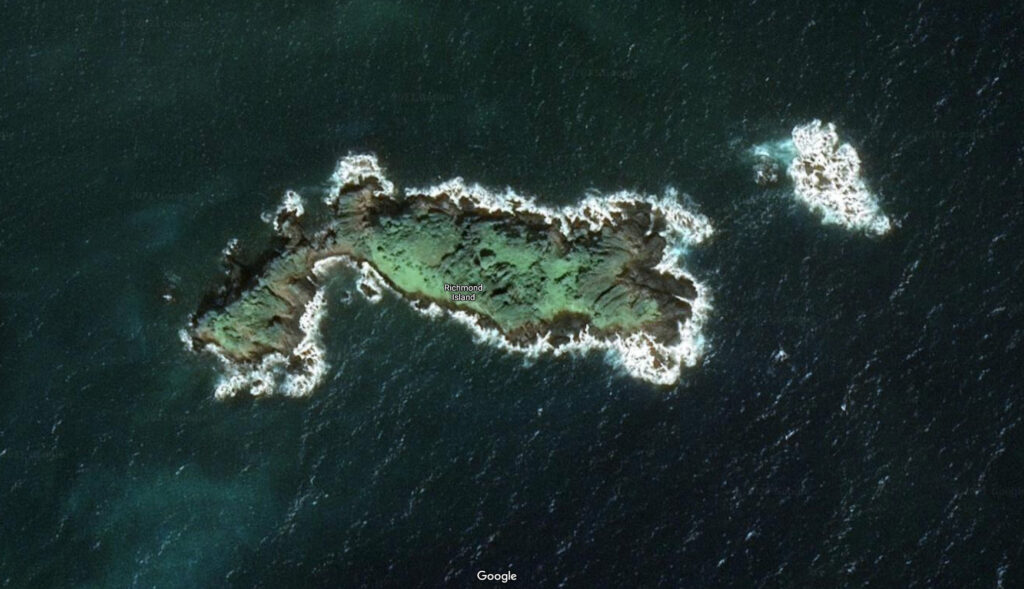
Richmond Island is located on the eastern side of Tobago outside of Richmond bay.
Richmond Island
Sisters Rock
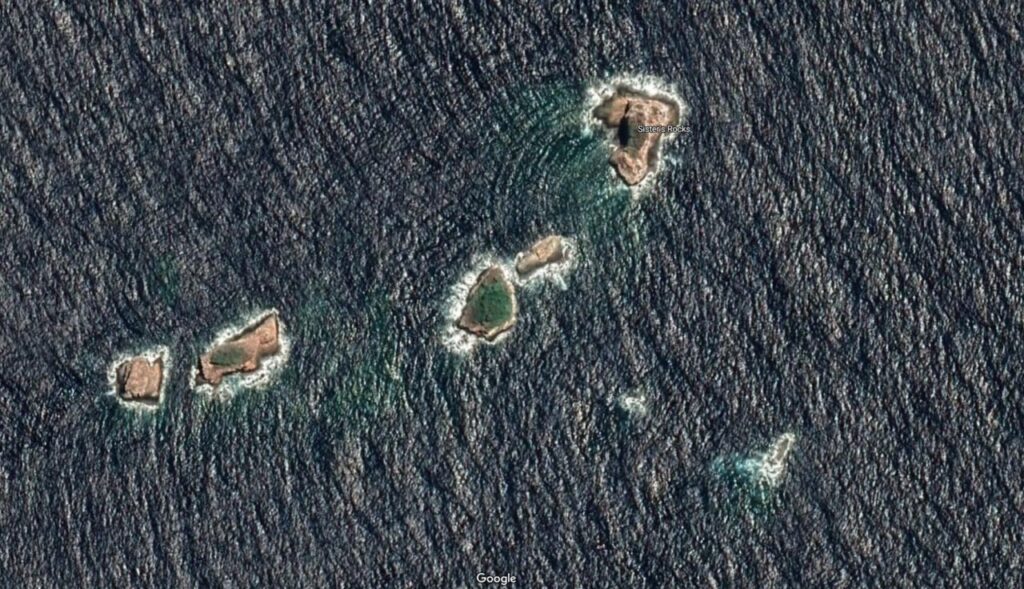
Sisters Rocks is tiny group of islands located off the northern coast of Tobago directly north of Parlatuvier. Sisters Rocks are popular for snorkeling and scuba diving for hammer-head sharks.
Indian Arrival Day is a public holiday in Trinidad and Tobago celebrated annually on May 30th to commemorate the arrival of the first indentured laborers from India in 1845.
The event signifies the cultural and historical significance of people of Indian origin who came to the Caribbean as indentured laborers to work on the sugar plantations.
The Indian Arrival Day celebrations usually begin with a religious ceremony held in major cities and towns where people participate in a puja or worship service. Cultural programs, performances, and parades are held throughout the day, showcasing the rich Indian heritage and traditions.
Dance performances, music and drumming, colorful costumes, and traditional Indian food are an integral part of the festivities. People also light diyas or lamps and offer prayers to their ancestors who came as indentured laborers to the Caribbean.
In Trinidad and Tobago, Indian Arrival Day is a time for people of Indian descent to reconnect with their roots, celebrate their culture and traditions and pay tribute to their ancestors who endured great hardship to build a new life in a foreign land.
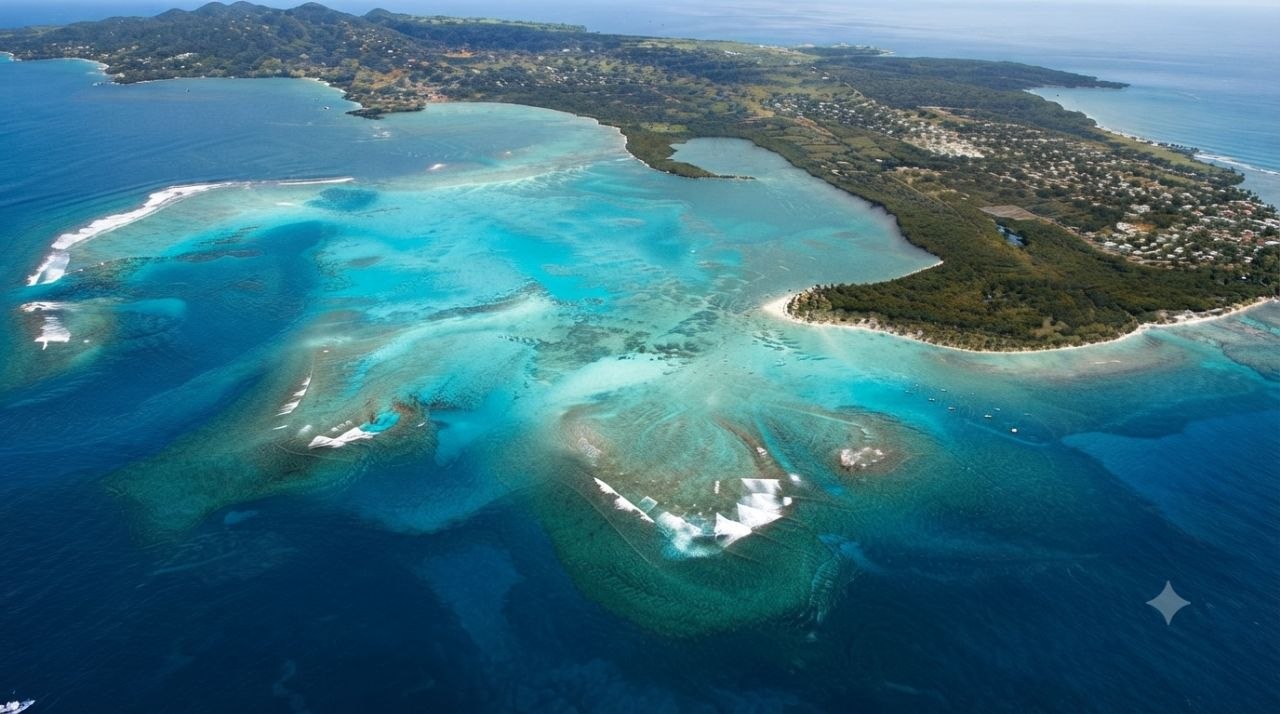
The Buccoo Reef is a crown jewel of Tobago’s marine life. It is one of the most accessible coral reefs in the Caribbean, it offers a window into a vibrant underwater world of fringing coral reefs.
The Buccoo Reef Marine Park
The reef is located on the western coast of the island of Tobago. It is a protected marine park and is one of the largest coral reefs in Tobago.
Glass Bottom Reef Boats
Visitors can take glass-bottom reef-boat tours to view the stunning array of marine life and coral formations that make up the fringing reef system. Snorkeling and scuba diving are also popular activities in the area.
What to Expect
The Coral Gardens
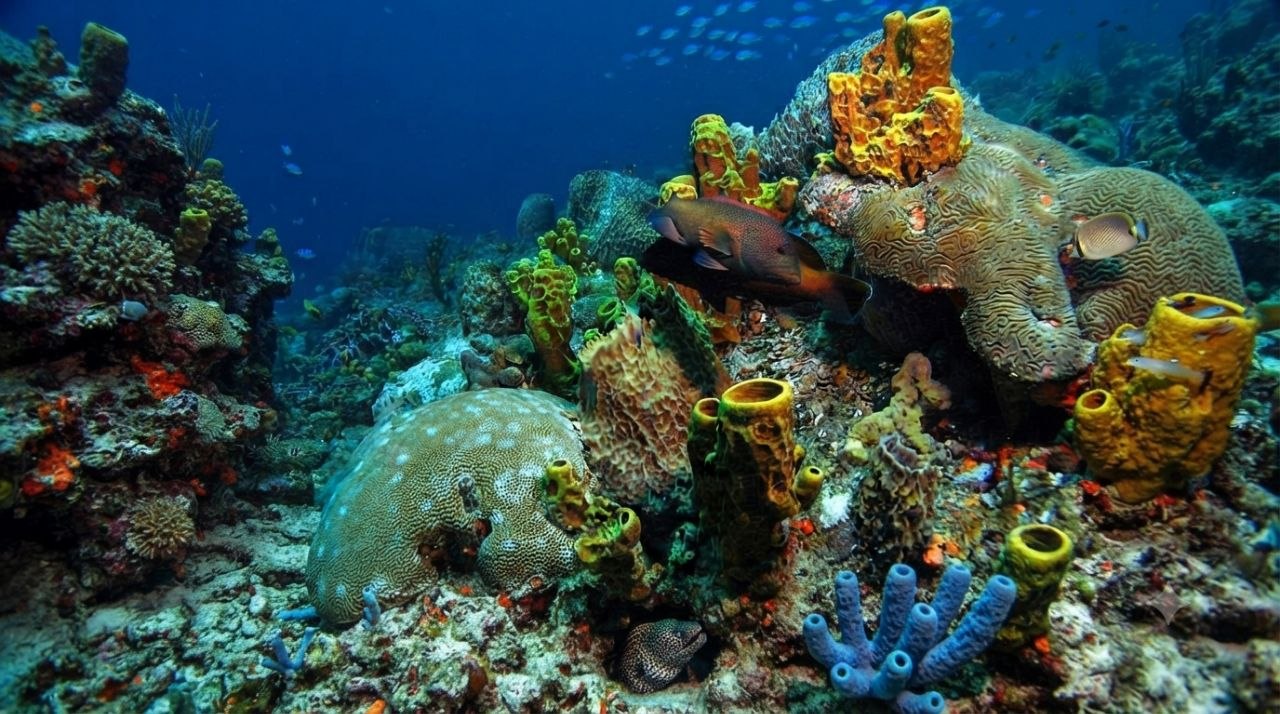
The Coral Gardens: A slightly deeper area of the reef, known for its stunning coral formations and diverse tropical fishes, that can be viewed through the glass bottom reef boats.
Nylon Pool
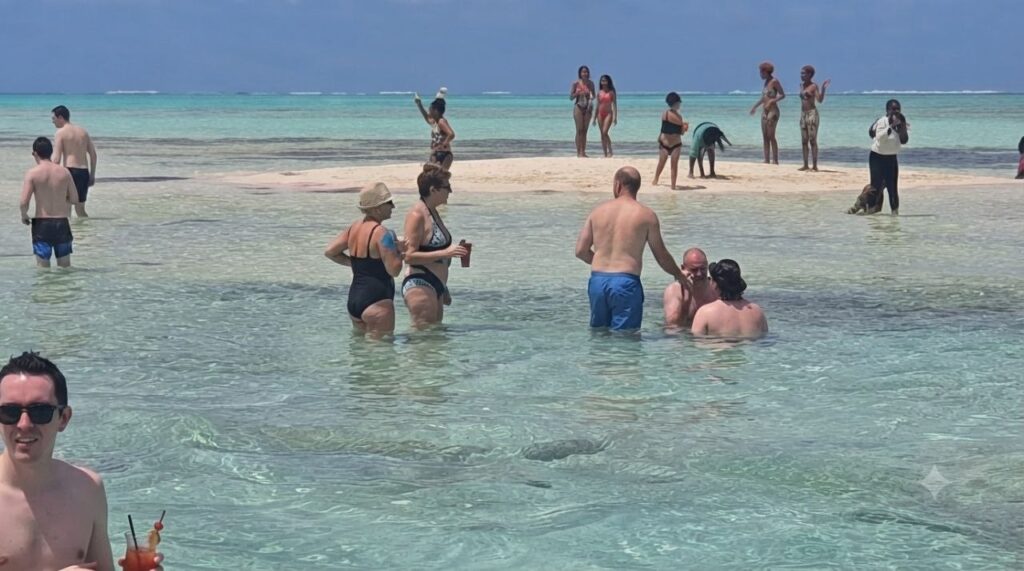
The Nylon Pool: A natural, waist-deep area in the reef that was named by Princess Margaret in 1962, who reportedly said the water was as clear as her nylon stockings.
Reef Sand Bank
The Sand Bank: This is a natural formation of sand deposited in a small area of the reef. It is sometimes visible depending on the tides and currents.
Bon Accord Lagoon
Bon Accord Lagoon: The Buccoo Reef borders the Bon Accord Lagoon, creating a complex ecosystem essential for the island’s sea life and mangroves.
Essential info
Size – 2.7 mi²
Type – Fringing Coral Reef
Largest in Tobago
Nylon Pool
Coral Gardens
Bon Accord Lagoon
Reef boat tours
Snokelling
No mans land
Sun Protection: The sun reflects off the shallow water intensely. Wear reef-safe sunscreen or a rash guard to protect your skin and the delicate corals below.
Footwear: While the sand is soft, some areas near the reef can be sharp. Consider water shoes if you plan on exploring.
Booking Your Tour: Most tours depart from Buccoo Beach, Store Bay, or Pigeon Point. You don’t always need to book online; you can often find reputable local operators directly on the beach, but checking reviews on platforms like TripAdvisor or Instagram first is always a good idea.
Beyond the Reef: Local Culture If you have time, many tours also stop at No Man’s Land, a secluded beach nearby. It’s the perfect place to relax after your swim, enjoy a local snack, and take in the view of the coastline
No man’s land
Overall, Buccoo Reef is a must-visit destination for anyone on the island of Tobago, offering a unique blend of natural marine beauty, adventure, and local culture.
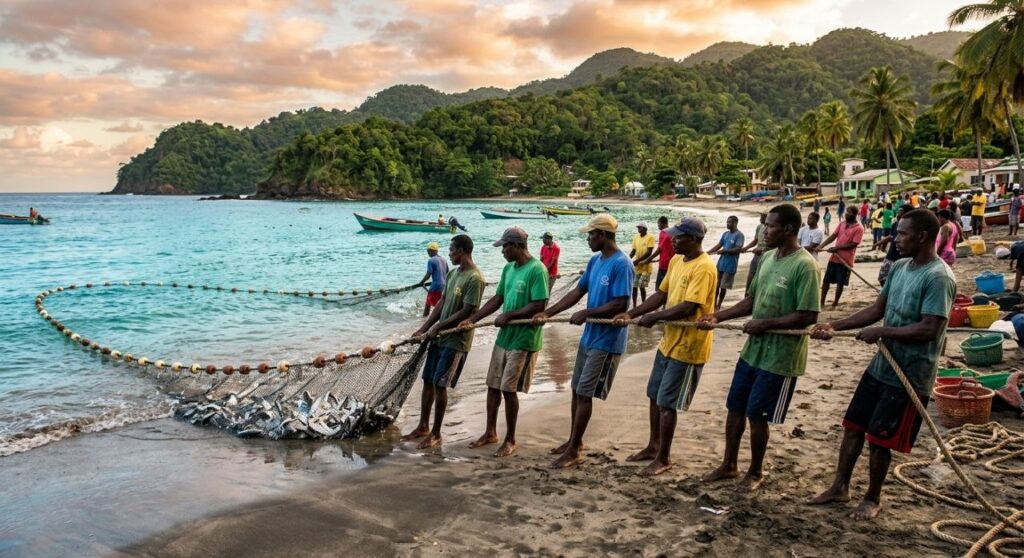
“Pulling seine” is a traditional fishing method used in Tobago and other parts of the Caribbean. The process involves a large net, called a seine, which is pulled through the water by a group of fishermen.
To pull seine in Tobago, a group of fishermen typically launch a small boat or canoe from the beach and paddle out into the water. Once they have reached a suitable spot, they throw the net into the water and begin to pull it back towards the shore. As the net is pulled, it forms a large circle around schools of fish, which are trapped inside the net.
Once the net has been pulled to the shore, the fishermen gather around and begin to haul in the catch. This can be a physically demanding process, as the net can be quite heavy and the catch can be quite large.
Pulling seine is a traditional fishing method that has been used in Tobago for many years. While it is still practiced today, it is becoming less common as commercial fishing methods become more popular. However, some fishermen continue to use this method as a way to catch fish for their families and communities.