The Main Ridge Forest
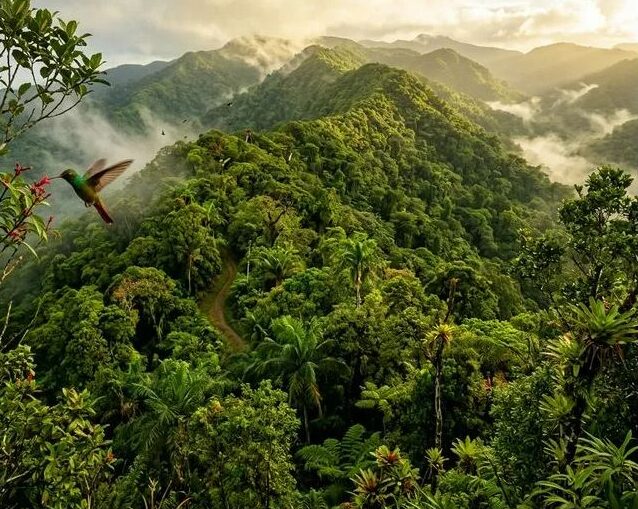
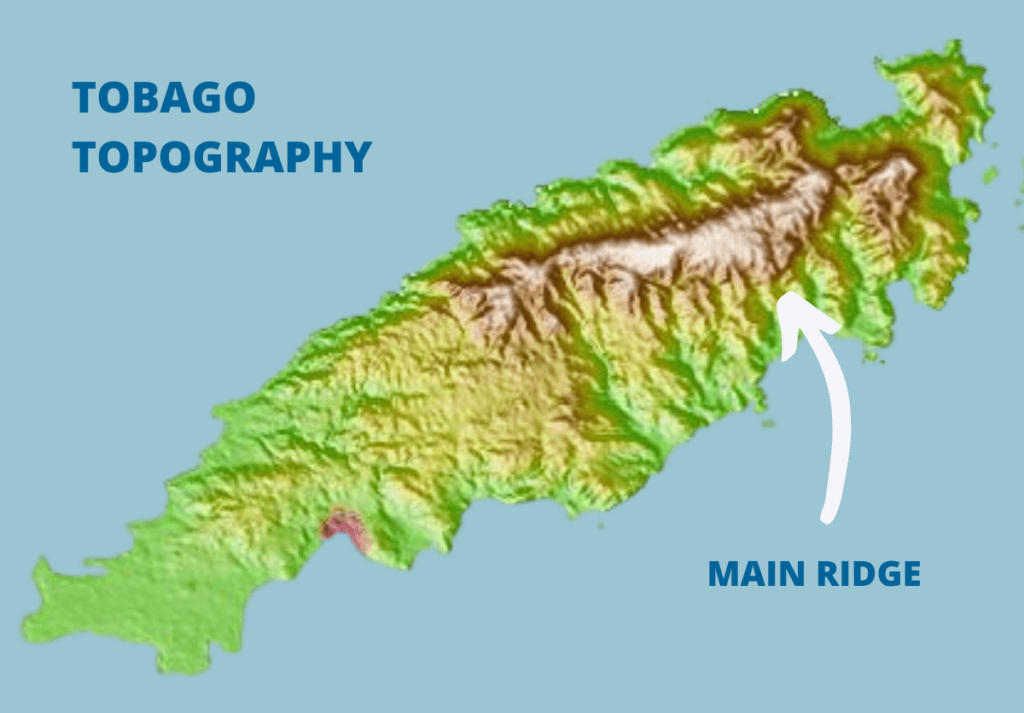
The Main Ridge Forest thrive on a mountainous volcanic spine that traverses about two-thirds of the length of our cigar-shaped island from its north-east tip. On one side of the island, the land rises steeply into the hills while, on the other side, it drops sharply to sandy beaches below.
The Main Ridge Forest Reserve is home to a wide variety of flora and fauna, including over 200 species of birds, over 600 species of butterflies, and numerous species of mammals, reptiles, and amphibians. It is also an important watershed that provides drinking water to local communities.
The forest reserve offers numerous hiking trails and nature walks, as well as opportunities for birdwatching and wildlife viewing. The reserve is also an important site for research and education, with several institutions conducting studies on the ecology and biodiversity of the forest.
The Main Ridge Forest Reserve is a crucial component of Tobago’s natural heritage, and its protection and conservation are vital to the island’s future sustainability.

Hailed today as the western hemisphere’s first legally protected tropical rainforest, Tobago’s Main Ridge Forest Reserve had been established in 1765 by the Young Commission well over a century before German botanist Alfred F.W. Schimper coined the term tropische regenwald, or ‘tropical rain forest’ in 1898.
Tobagonians are also justifiably proud of what many consider to be the passage of the world’s first environmental protection act, when on April 13, 1776, after 11 long years of lobbying by English physiologist Stephen Hales and British MP Soame Jenyns, a law was passed protecting Tobago’s Main Ridge Rain forest as a Crown Reserve, saving it from demise due to deforestation by early colonial plantation owners. Were it not for Hales, whose research revealed the symbiotic relationship between forests and rainfall, the plantation owners who plundered the forests for its lumber and cleared it for cultivation would have destroyed not only forest but the island’s vital water resource.
Over two centuries later, with world tropical deforestation estimated putting the destruction or degradation of rainforests at around 100,000 sq. km. (39,000 sq. miles) a year, we are thankful that Tobago’s little slice of rainforest heaven has been protected for over 200 years and will continue to be protected indefinitely. We invite you to explore our lush rainforest – it is our gift to you to explore, wander through and enjoy its many wonders.
RAINFOREST BIODIVERSITY:
South America’s rainforest biodiversity is phenomenal and having once been attached to the mainland, Tobago has benefitted from this natural boon and even shares some species with northern Venezuela that do not exist in Trinidad. It is this diversity and its ease of access
RAINFOREST WILDLIFE

Of the 220-plus species of birds recorded in Tobago, at least 100 may be spotted in the Reserve, and mammalian wildlife such as armadillos, agoutis, wild hogs, red squirrels, raccoons and opossums still roam the forest’s undergrowth. Several bat species, including a piscivorous (fish-eating) bat, also inhabit the forest. The Reserve is also home to a number of non-venomous snakes as well as many lizards and frogs. Insects abound, with many species awaiting discovery.
RAINFOREST VEGETATION
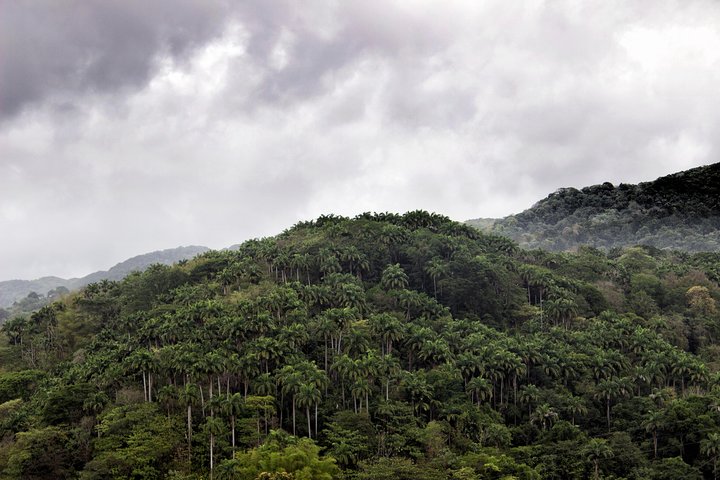
Tobago’s Main Ridge Reserve affords naturalists the rare opportunity to examine the multi-dimensional strata of a tropical rainforest. A closed 30-50 metres (100-165 feet) high canopy umbrellas the rainforest. Its emergent layer has the largest trees, which sometimes protrude over the canopy. Large lianas (or climbers) are common while ferns, palms and slow-growing trees dominate the understory. On the ground layer there is a profusion of seedlings and herbaceous plants as well as a plethora of wild orchids, bromeliads and other epiphytes. Rippling streams and cascading waterfalls add a refreshing dimension to the Reserve.
RAINFOREST IN REREGENERATION
Hurricane Flora – which in 1963 ravaged about 75% of the forest – left a rare opportunity to witness amid the surviving old-growth trees, a rainforest’s re-growth. Over four decades later, Tobago’s rainforest is now a living example of a rainforest regenerating as lush ground vegetation and slender trees emerge in a protected environment. In a century or so, there will be huge trees, a dense canopy and minimal ground vegetation. This form of conservation is indeed rare, especially on such a small accessible island.
RAINFOREST ACCESSIBILITY
Via the Rainforest Reserve Road, from just south of Roxborough to Bloody Bay, a leisurely drive will take you through this mature forested area. Eventually you will reach Gilpin Trace, one of the main trails in the Reserve. Another way to investigate the natural bounty of the rainforest is to take one of the several hiking tours that follow Amerindian trails of old with one of our certified tour guides.