Tobago has a rich history, and as a result, there are several forts located on the island that were built to defend against colonial powers. Some of the most notable forts in Tobago include:
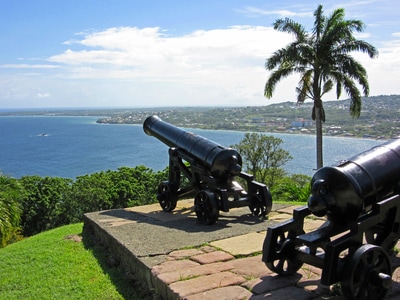
Fort King George: Built in the 18th century, Fort King George is the largest and most well-preserved fort in Tobago. It offers spectacular views of the island and the Caribbean Sea, and it now houses the Tobago Museum and the National Archives.
Fort Bennett: Located on a cliff overlooking the Caribbean Sea, Fort Bennett was built in the 17th century by the Dutch to defend against attacks from the French. It is now a popular spot for visitors to take in the breathtaking views of the sea and the surrounding coastline.
Fort James: Built in the early 18th century, Fort James was constructed by the British to defend against attacks by the French. Today, it is a popular spot for hiking and bird watching, as well as for taking in the scenic views of the coastline.
Fort Granby: Located on a hill overlooking Great Courland Bay, Fort Granby was built in the 18th century by the French to defend against the British. It offers stunning views of the bay and the surrounding countryside.
Fort Milford: Built in the late 18th century by the British, Fort Milford is located on a hill overlooking Scarborough and the Atlantic Ocean. Today, it is a popular spot for visitors to take in the panoramic views of the town and the sea.
Overall, Tobago’s forts offer a glimpse into the island’s rich history and provide visitors with stunning views of the coastline and surrounding countryside. They are well worth a visit for anyone interested in history or looking for a unique perspective on the island.
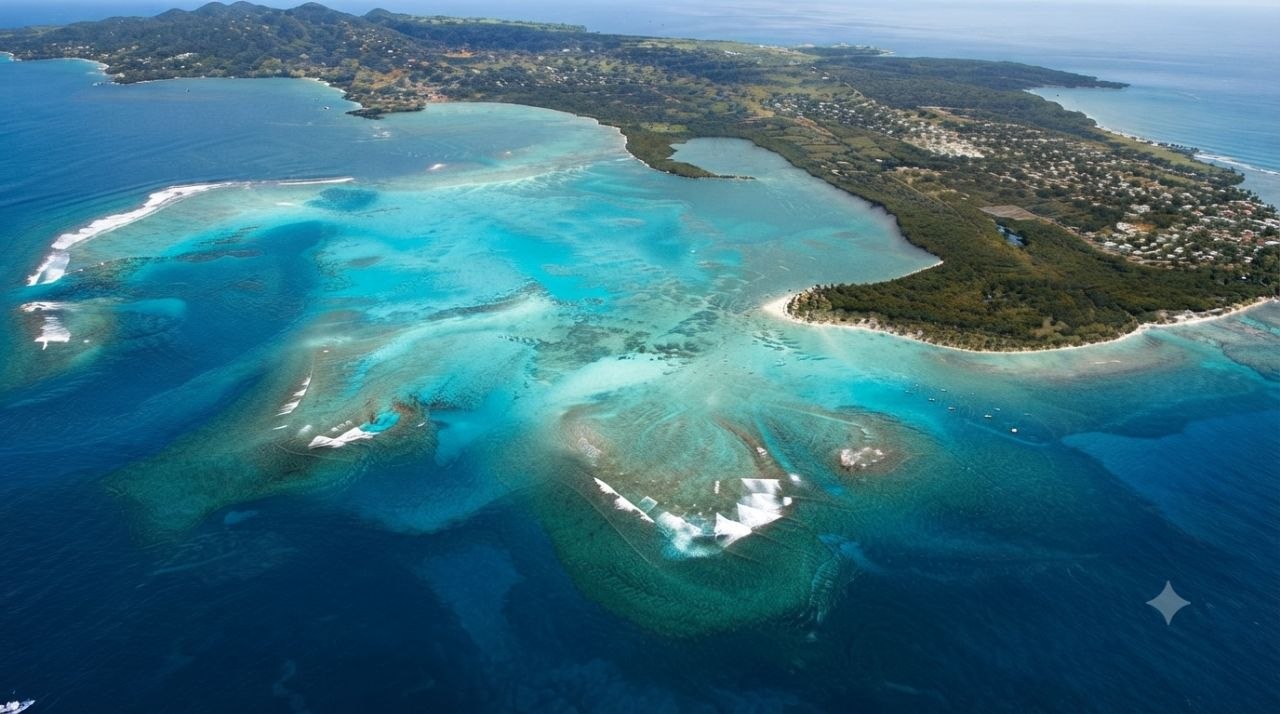
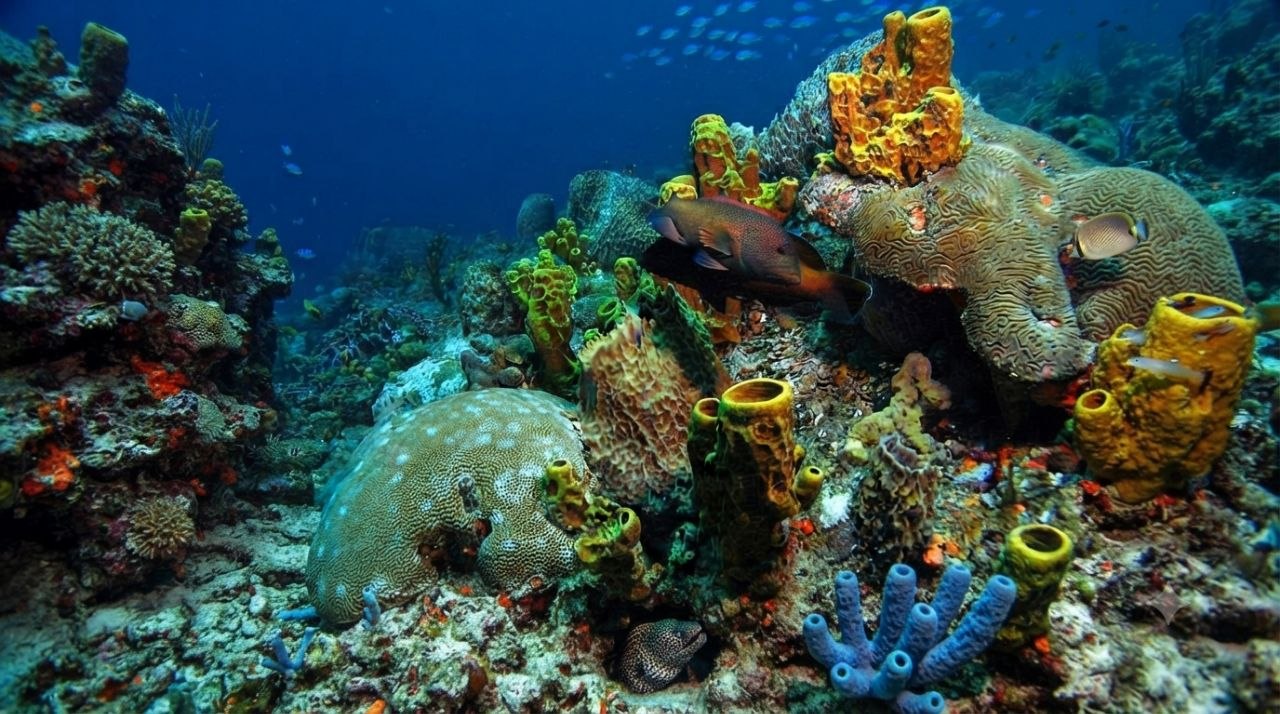
The Buccoo Reef is a crown jewel of Tobago’s marine life. It is one of the most accessible coral reefs in the Caribbean, it offers a window into a vibrant underwater world of fringing coral reefs.
The Buccoo Reef Marine Park
The reef is located on the western coast of the island of Tobago. It is a protected marine park and is one of the largest coral reefs in Tobago.
Glass Bottom Reef Boats
Visitors can take glass-bottom reef-boat tours to view the stunning array of marine life and coral formations that make up the fringing reef system. Snorkeling and scuba diving are also popular activities in the area.
What to Expect
The Coral Gardens
The Coral Gardens: A slightly deeper area of the reef, known for its stunning coral formations and diverse tropical fishes, that can be viewed through the glass bottom reef boats.
Nylon Pool
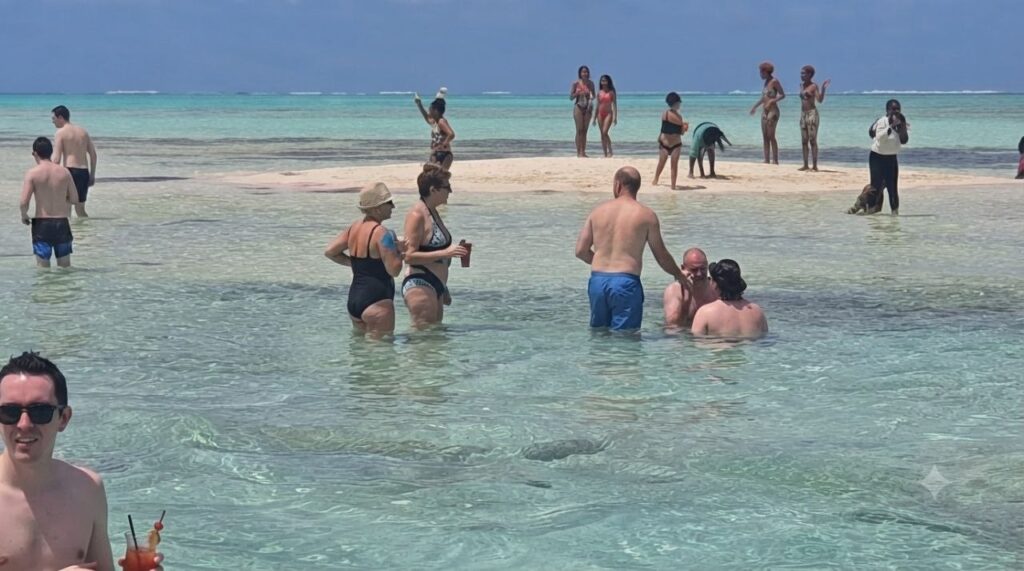
The Nylon Pool: A natural, waist-deep area in the reef that was named by Princess Margaret in 1962, who reportedly said the water was as clear as her nylon stockings.
Reef Sand Bank
The Sand Bank: This is a natural formation of sand deposited in a small area of the reef. It is sometimes visible depending on the tides and currents.
Bon Accord Lagoon
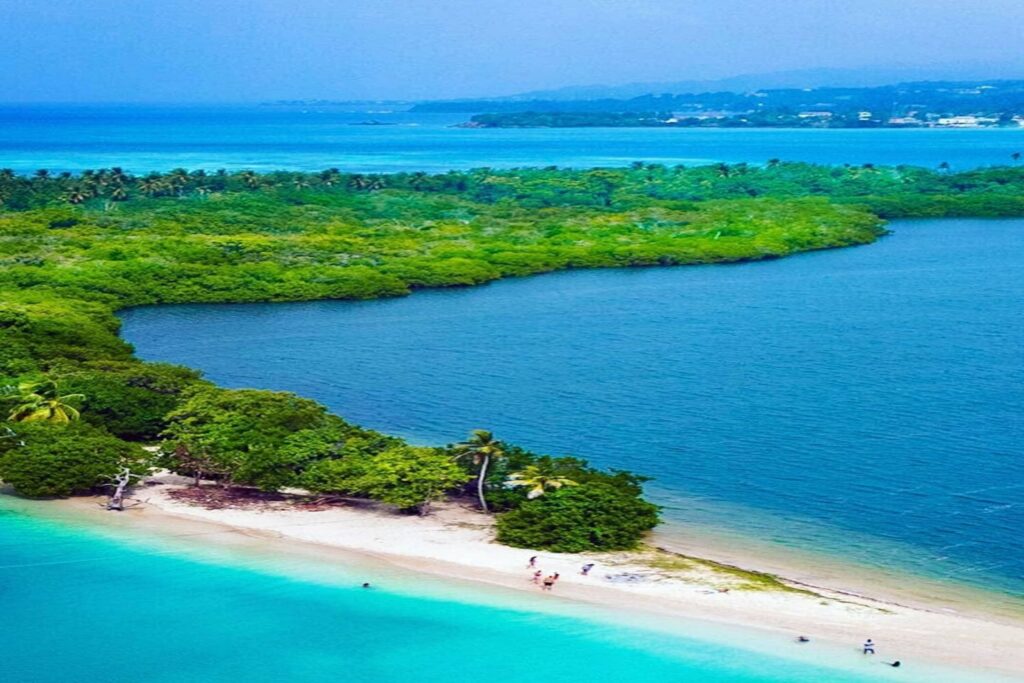
Bon Accord Lagoon: The Buccoo Reef borders the Bon Accord Lagoon, creating a complex ecosystem essential for the island’s sea life and mangroves.
Essential info
Size – 2.7 mi²
Type – Fringing Coral Reef
Largest in Tobago
Nylon Pool
Coral Gardens
Bon Accord Lagoon
Reef boat tours
Snokelling
No mans land
Sun Protection: The sun reflects off the shallow water intensely. Wear reef-safe sunscreen or a rash guard to protect your skin and the delicate corals below.
Footwear: While the sand is soft, some areas near the reef can be sharp. Consider water shoes if you plan on exploring.
Booking Your Tour: Most tours depart from Buccoo Beach, Store Bay, or Pigeon Point. You don’t always need to book online; you can often find reputable local operators directly on the beach, but checking reviews on platforms like TripAdvisor or Instagram first is always a good idea.
Beyond the Reef: Local Culture If you have time, many tours also stop at No Man’s Land, a secluded beach nearby. It’s the perfect place to relax after your swim, enjoy a local snack, and take in the view of the coastline
No man’s land
Overall, Buccoo Reef is a must-visit destination for anyone on the island of Tobago, offering a unique blend of natural marine beauty, adventure, and local culture.
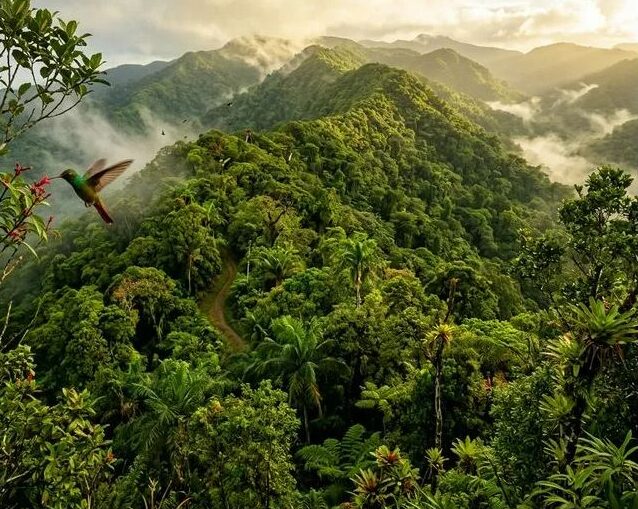
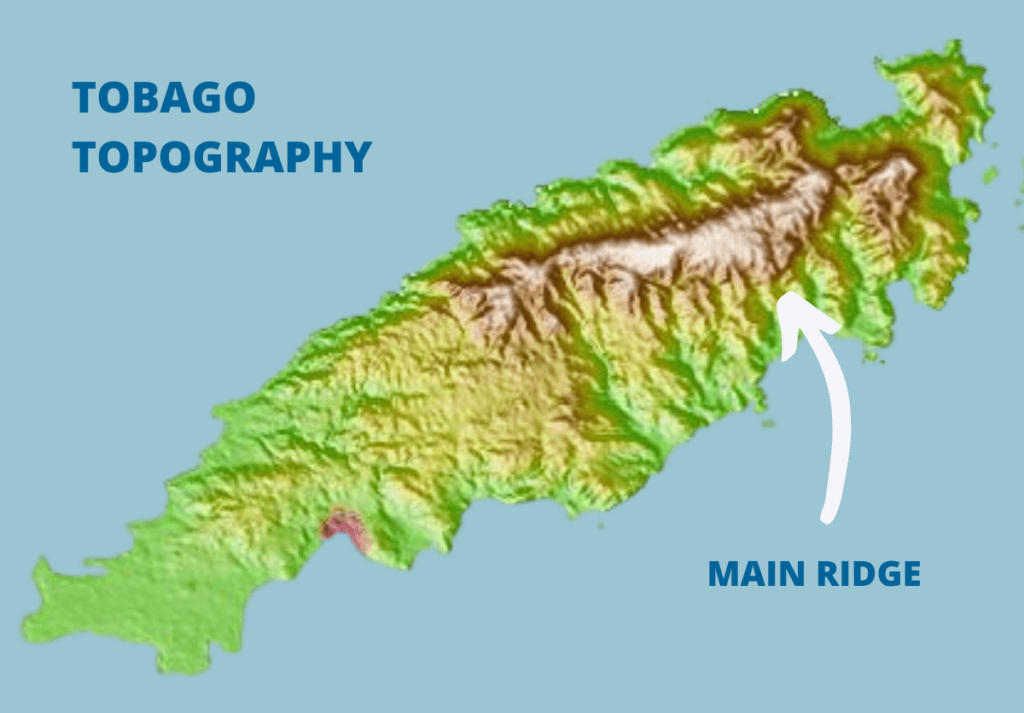
The Main Ridge Forest thrive on a mountainous volcanic spine that traverses about two-thirds of the length of our cigar-shaped island from its north-east tip. On one side of the island, the land rises steeply into the hills while, on the other side, it drops sharply to sandy beaches below.
The Main Ridge Forest Reserve is home to a wide variety of flora and fauna, including over 200 species of birds, over 600 species of butterflies, and numerous species of mammals, reptiles, and amphibians. It is also an important watershed that provides drinking water to local communities.
The forest reserve offers numerous hiking trails and nature walks, as well as opportunities for birdwatching and wildlife viewing. The reserve is also an important site for research and education, with several institutions conducting studies on the ecology and biodiversity of the forest.
The Main Ridge Forest Reserve is a crucial component of Tobago’s natural heritage, and its protection and conservation are vital to the island’s future sustainability.
Hailed today as the western hemisphere’s first legally protected tropical rainforest, Tobago’s Main Ridge Forest Reserve had been established in 1765 by the Young Commission well over a century before German botanist Alfred F.W. Schimper coined the term tropische regenwald, or ‘tropical rain forest’ in 1898.
Tobagonians are also justifiably proud of what many consider to be the passage of the world’s first environmental protection act, when on April 13, 1776, after 11 long years of lobbying by English physiologist Stephen Hales and British MP Soame Jenyns, a law was passed protecting Tobago’s Main Ridge Rain forest as a Crown Reserve, saving it from demise due to deforestation by early colonial plantation owners. Were it not for Hales, whose research revealed the symbiotic relationship between forests and rainfall, the plantation owners who plundered the forests for its lumber and cleared it for cultivation would have destroyed not only forest but the island’s vital water resource.
Over two centuries later, with world tropical deforestation estimated putting the destruction or degradation of rainforests at around 100,000 sq. km. (39,000 sq. miles) a year, we are thankful that Tobago’s little slice of rainforest heaven has been protected for over 200 years and will continue to be protected indefinitely. We invite you to explore our lush rainforest – it is our gift to you to explore, wander through and enjoy its many wonders.
RAINFOREST BIODIVERSITY:
South America’s rainforest biodiversity is phenomenal and having once been attached to the mainland, Tobago has benefitted from this natural boon and even shares some species with northern Venezuela that do not exist in Trinidad. It is this diversity and its ease of access
RAINFOREST WILDLIFE
Of the 220-plus species of birds recorded in Tobago, at least 100 may be spotted in the Reserve, and mammalian wildlife such as armadillos, agoutis, wild hogs, red squirrels, raccoons and opossums still roam the forest’s undergrowth. Several bat species, including a piscivorous (fish-eating) bat, also inhabit the forest. The Reserve is also home to a number of non-venomous snakes as well as many lizards and frogs. Insects abound, with many species awaiting discovery.
RAINFOREST VEGETATION
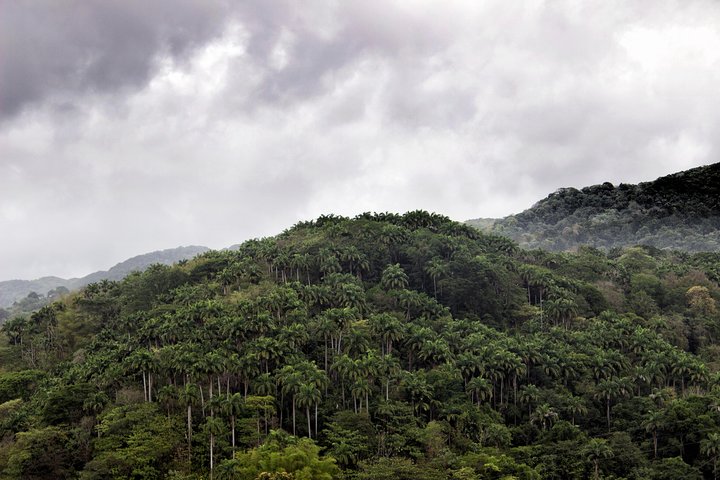
Tobago’s Main Ridge Reserve affords naturalists the rare opportunity to examine the multi-dimensional strata of a tropical rainforest. A closed 30-50 metres (100-165 feet) high canopy umbrellas the rainforest. Its emergent layer has the largest trees, which sometimes protrude over the canopy. Large lianas (or climbers) are common while ferns, palms and slow-growing trees dominate the understory. On the ground layer there is a profusion of seedlings and herbaceous plants as well as a plethora of wild orchids, bromeliads and other epiphytes. Rippling streams and cascading waterfalls add a refreshing dimension to the Reserve.
RAINFOREST IN REREGENERATION
Hurricane Flora – which in 1963 ravaged about 75% of the forest – left a rare opportunity to witness amid the surviving old-growth trees, a rainforest’s re-growth. Over four decades later, Tobago’s rainforest is now a living example of a rainforest regenerating as lush ground vegetation and slender trees emerge in a protected environment. In a century or so, there will be huge trees, a dense canopy and minimal ground vegetation. This form of conservation is indeed rare, especially on such a small accessible island.
RAINFOREST ACCESSIBILITY
Via the Rainforest Reserve Road, from just south of Roxborough to Bloody Bay, a leisurely drive will take you through this mature forested area. Eventually you will reach Gilpin Trace, one of the main trails in the Reserve. Another way to investigate the natural bounty of the rainforest is to take one of the several hiking tours that follow Amerindian trails of old with one of our certified tour guides.
Little Tobago is a small island located off the northeast coast of Tobago, which is itself an island in the southern Caribbean Sea and part of the nation of Trinidad and Tobago. Little Tobago is also known as Bird of Paradise Island, due to its abundance of exotic birds, including the red-billed tropicbird, the white-tailed sabrewing hummingbird, and the magnificent frigatebird.
The island is home to a bird sanctuary and nature reserve, and is a popular destination for birdwatchers and eco-tourists. It is accessible by boat from the village of Speyside on Tobago’s main island.
The island is popular for
Naturalists
Bird-watching
Angel reef
Scuba diving
Glass-bottom boat tours
Angel reef is also a popular site around the island for divers and glass-bottom boat tours.
The largest brain coral in the caribbean is also located on the reef system.
The island is an important breeding site for seabirds such as red-billed tropicalbird, bridled terns and many more.
Hillsborough Reservoir, which was commissioned in May 1952, by His Excellency Sir Hubert Elvin Rance, then Governor of Trinidad and Tobago, is the only impounding reservoir in Tobago.
The reservoir is located 870 feet above sea level, Hillsborough has a rustic beauty and an elegantly designed spillway which provides a safety outlet when the reservoir is too full. The reservoir has a maximum storage capacity of 1.02 million m³ and the water treatment plant located just below can produce up to 9,091m3 per day. Water from the reservoir serves areas such as Mt. St. George, Concordia, Whim, Mary’s Hill, Union and Les Coteaux.
The raw water from the reservoir passes through two strainers that clear the incoming water of large debris such as branches, twigs and leaves before entering the chemical house. Aluminium sulphate (alum) is added to make the suspended particles of silt and mud in the water coagulate and form large and heavier particles that sink to the bottom of the sedimentation (or settling) basins. The water is then filtered through layers of sand and gravel, a process that removes fine particles still in the water. The final stage of the water treatment process is the addition of lime, to counteract the acidity of the water and the injection of chlorine to destroy any disease-causing bacteria.
Construction of the Hillsborough Dam significantly changed the landscape but the catchment area and the reservoir still teem with an abundance of wildlife and a variety of flora. There are twenty-eight (28) species of birds documented at Hillsborough which will excite the interest of any bird watcher.
Between March and August each year, giant leather-backs, Hawks-bill, and Green sea turtles visit the shores of Tobago to lay their eggs. The process can take up to 2 hours from start to finish, going longer sometimes if the turtles are disturbed.
Some turtles will make multiply visits to the shores during the season untill the right spot is found. Once the nesting process is complete – aproximately 60 days later, baby turtle hatchlings will emerge from the sand.
What happens :
A sea turtle will find the right spot for a nest by checking the sand with both front and back flippers.
Sea Turtles dig holes up to 2.5 feet deep with back flippers only.
Once the right depth is met – between 60 -100 eggs are layed.
Sea Turtles will then gentle cover eggs with back flippers only.
They will then use both flippers to camouflage the area around the nest.
Once completed they then slowly return to the sea.
Popular Bays for sightings:
Turtle Beach – Great Courland Bay
Grafton Bay – Stone Haven Bay
Back Bay – Mt. Irvine
Lambeau Beach – Little Rockly Bay
Protection Guidelines
If possible, do not disturb, obstruct or approach a turtle that is coming to shore, laying or covering its nest.
Never handle Turtle eggs or try to sit, stand or ride on a Turtle.
Avoid using bright lights as it can confuse the Turtles or cause them to abandon their nests.
If observing – stay up to 20 feet away from Turtles while they are nesting.
The Tobago Goat Race is an annual event that takes place on the Caribbean island of Tobago. It is a unique cultural event that has been held for over a century and attracts both locals and visitors to the island.
The Tobago Goat Race is essentially a type of goat-racing event, where trained goats compete against each other in a race. The goats are typically bred and trained specifically for this purpose and are often adorned with colorful costumes and decorations.
Goat Racing – Buccoo Tobago
The event usually takes place in Buccoo, a small fishing village on the island’s west coast. It is a day-long celebration that includes food, music, and other cultural activities in addition to the goat races.
The Tobago Goat Race is not only a fun and entertaining event, but it is also an important part of Tobago’s cultural heritage. It is a way for the islanders to celebrate their traditions and showcase their unique way of life to the world. If you happen to be in Tobago during the event, it is definitely worth checking out!
Easter Tuesday Buccoo, a small seaside village on the southwest coast of Tobago, has hosted goat racing since 1925. Goat racing developed as a poor man’s equivalent to horse racing In the early twentieth-century, since horse racing was reserved for the local elite. Since horse racing traditionally occurred on the Monday after Easter Sunday, Easter Tuesday was chosen to run goat races by the Buccoo Goat Race Festival Committee, a sub-committee of the Buccoo Village Council, that organises the event annually.
Easter Monday The village of Mt. Pleasant is also hosts to the goat racing festival which occurs on Easter Monday. A large gathering of family, friends and acquaintances also adds to the event’s popularity and attendance on the day.