|

Tobago Heritage Festival

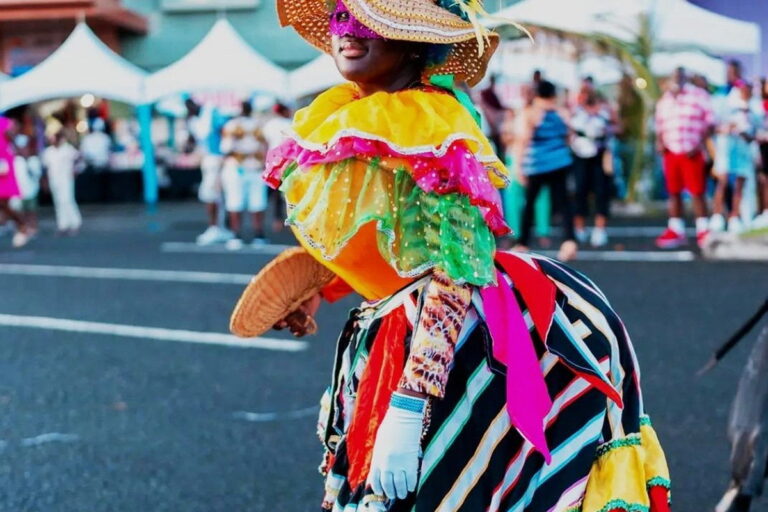
The Tobago Heritage Festival is an annual event that takes place on the island of Tobago in the Republic of Trinidad and Tobago. The festival celebrates Tobago’s rich cultural heritage and traditions and takes place over a two-week period in late July and early August.

During the festival, visitors can enjoy a wide range of cultural events and activities, including traditional music and dance performances, storytelling sessions, arts and crafts exhibitions, and local cuisine. The festival also features historical reenactments and demonstrations of traditional skills such as boat-building, basket-weaving, and wood-carving.

One of the highlights of the Tobago Heritage Festival is the “ole time wedding” reenactment, which is a recreation of a traditional Tobagonian wedding from the past. The festival also includes a “parang” competition, which is a type of traditional music that originated in Trinidad and Tobago.

The Tobago Heritage Festival provides an opportunity for visitors to learn about Tobago’s rich history and cultural heritage, and to experience the island’s unique traditions and way of life. The festival is a vibrant celebration of Tobago’s past, present, and future, and is a must-see event for anyone visiting the island.
More Guides

  • | |

    Nesting Sea Turtles

    Turtle Season

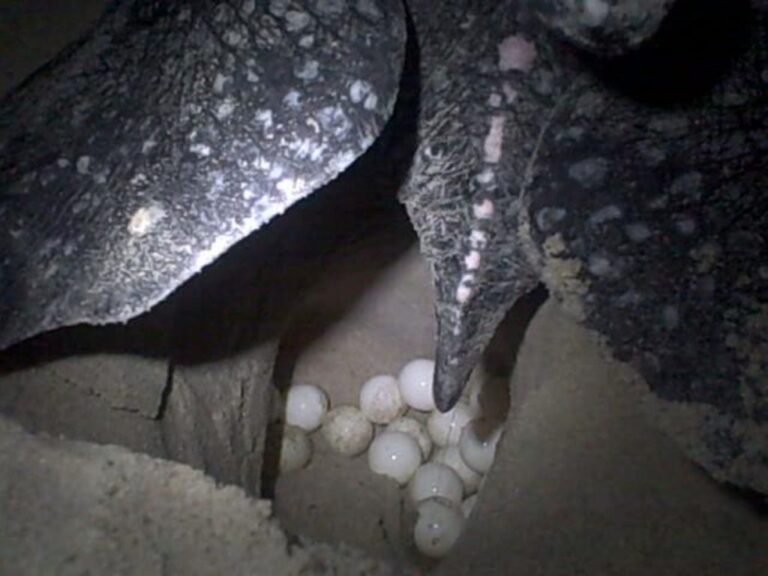
    Between March and August each year, giant leather-backs, Hawks-bill, and Green sea turtles visit the shores of Tobago to lay their eggs. The process can take up to 2 hours from start to finish, going longer sometimes if the turtles are disturbed.

    Some turtles will make multiply visits to the shores during the season untill the right spot is found. Once the nesting process is complete – aproximately 60 days later, baby turtle hatchlings will emerge from the sand.


    What happens :

    • A sea turtle will find the right spot for a nest by checking the sand with both front and back flippers.
    • Sea Turtles dig holes up to 2.5 feet deep with back flippers only.
    • Once the right depth is met – between 60 -100 eggs are layed.
    • Sea Turtles will then gentle cover eggs with back flippers only.
    • They will then use both flippers to camouflage the area around the nest.
    • Once completed they then slowly return to the sea.


    Popular Bays for sightings:

    • Turtle Beach – Great Courland Bay
    • Grafton Bay – Stone Haven Bay
    • Back Bay – Mt. Irvine
    • Lambeau Beach – Little Rockly Bay

    Protection Guidelines

    • If possible, do not disturb, obstruct or approach a turtle that is coming to shore, laying or covering its nest.
    • Never handle Turtle eggs or try to sit, stand or ride on a Turtle.
    • Avoid using bright lights as it can confuse the Turtles or cause them to abandon their nests.
    • If observing – stay up to 20 feet away from Turtles while they are nesting.
  • |

    Hillsborough Reservoir

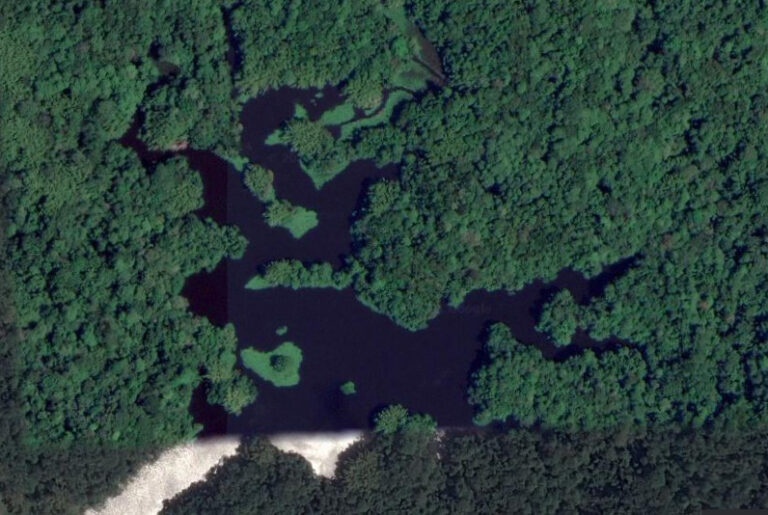
    Hillsborough Reservoir, which was commissioned in May 1952, by His Excellency Sir Hubert Elvin Rance, then Governor of Trinidad and Tobago, is the only impounding reservoir in Tobago.

    The reservoir is located 870 feet above sea level, Hillsborough has a rustic beauty and an elegantly designed spillway which provides a safety outlet when the reservoir is too full. The reservoir has a maximum storage capacity of 1.02 million m³ and the water treatment plant located just below can produce up to 9,091m3 per day.
    Water from the reservoir serves areas such as Mt. St. George, Concordia, Whim, Mary’s Hill, Union and Les Coteaux.

    The raw water from the reservoir passes through two strainers that clear the incoming water of large debris such as branches, twigs and leaves before entering the chemical house. Aluminium sulphate (alum) is added to make the suspended particles of silt and mud in the water coagulate and form large and heavier particles that sink to the bottom of the sedimentation (or settling) basins. The water is then filtered through layers of sand and gravel, a process that removes fine particles still in the water. The final stage of the water treatment process is the addition of lime, to counteract the acidity of the water and the injection of chlorine to destroy any disease-causing bacteria.

    Construction of the Hillsborough Dam significantly changed the landscape but the catchment area and the reservoir still teem with an abundance of wildlife and a variety of flora.
    There are twenty-eight (28) species of birds documented at Hillsborough which will excite the interest of any bird watcher.

    WASA

  • Indian Arrival Day

    Indian Arrival Day is a public holiday in Trinidad and Tobago celebrated annually on May 30th to commemorate the arrival of the first indentured laborers from India in 1845.

    The event signifies the cultural and historical significance of people of Indian origin who came to the Caribbean as indentured laborers to work on the sugar plantations.

    The Indian Arrival Day celebrations usually begin with a religious ceremony held in major cities and towns where people participate in a puja or worship service. Cultural programs, performances, and parades are held throughout the day, showcasing the rich Indian heritage and traditions.

    Dance performances, music and drumming, colorful costumes, and traditional Indian food are an integral part of the festivities. People also light diyas or lamps and offer prayers to their ancestors who came as indentured laborers to the Caribbean.

    In Trinidad and Tobago, Indian Arrival Day is a time for people of Indian descent to reconnect with their roots, celebrate their culture and traditions and pay tribute to their ancestors who endured great hardship to build a new life in a foreign land.

  • | |

    October Carnival

    Tobago Carnival is an annual festival held on the island of Tobago in the Republic of Trinidad and Tobago. The carnival takes place in the weeks leading up to Ash Wednesday, which falls in February or March each year.

    The Tobago Carnival is a vibrant celebration of music, dance, and culture, with a focus on the island’s unique traditions and heritage. The festival features colorful costumes, lively music, and energetic dance performances, with participants taking to the streets to dance and celebrate.

    The Tobago Carnival is a smaller and more intimate version of the larger Trinidad Carnival, which takes place on the neighboring island of Trinidad. However, the Tobago Carnival still attracts a large number of visitors and locals each year, with events including calypso competitions, steelpan performances, and a grand parade on Carnival Tuesday.

    One of the highlights of the Tobago Carnival is the traditional J’Ouvert celebration, which takes place in the early hours of Carnival Monday. During J’Ouvert, participants cover themselves in mud, paint, and powder as they dance through the streets to the beat of steel drums and soca music.

    The Tobago Carnival is a lively and colorful celebration of Tobago’s culture and heritage, and is a must-see event for anyone visiting the island during the Carnival season.

  • Baptist Liberation Day

    Spiritual Baptist Shouter Liberation Day is a public holiday in Trinidad and Tobago, celebrated annually on March 30th. It commemorates the repeal of the 1917 Ordinance that prohibited the practice of the Spiritual Baptist faith.

    The Spiritual Baptist faith is a blend of African, Christian, and indigenous spiritual beliefs and practices. Despite being banned for decades, the faith remained strong and resilient, with its followers often facing persecution and discrimination.

    In 1951, the ordinance was repealed, and followers of the faith were finally able to worship freely. Today, Spiritual Baptists celebrate their liberation and the preservation of their faith with singing, dancing, and worshiping.

    The public holiday is recognized by the government of Trinidad and Tobago as a national day of observance.

  • Forts

    Tobago has a rich history, and as a result, there are several forts located on the island that were built to defend against colonial powers. Some of the most notable forts in Tobago include:

    1. Fort King George: Built in the 18th century, Fort King George is the largest and most well-preserved fort in Tobago. It offers spectacular views of the island and the Caribbean Sea, and it now houses the Tobago Museum and the National Archives.
    2. Fort Bennett: Located on a cliff overlooking the Caribbean Sea, Fort Bennett was built in the 17th century by the Dutch to defend against attacks from the French. It is now a popular spot for visitors to take in the breathtaking views of the sea and the surrounding coastline.
    3. Fort James: Built in the early 18th century, Fort James was constructed by the British to defend against attacks by the French. Today, it is a popular spot for hiking and bird watching, as well as for taking in the scenic views of the coastline.
    4. Fort Granby: Located on a hill overlooking Great Courland Bay, Fort Granby was built in the 18th century by the French to defend against the British. It offers stunning views of the bay and the surrounding countryside.
    5. Fort Milford: Built in the late 18th century by the British, Fort Milford is located on a hill overlooking Scarborough and the Atlantic Ocean. Today, it is a popular spot for visitors to take in the panoramic views of the town and the sea.

    Overall, Tobago’s forts offer a glimpse into the island’s rich history and provide visitors with stunning views of the coastline and surrounding countryside. They are well worth a visit for anyone interested in history or looking for a unique perspective on the island.

Leave a Reply